
I photograph birds in wild places, from jungle and cloud forest to grassland, savannah and the protected páramos of Colombia, and license the images at no cost to local partners in conservation, so those places are worth more wild than cleared.
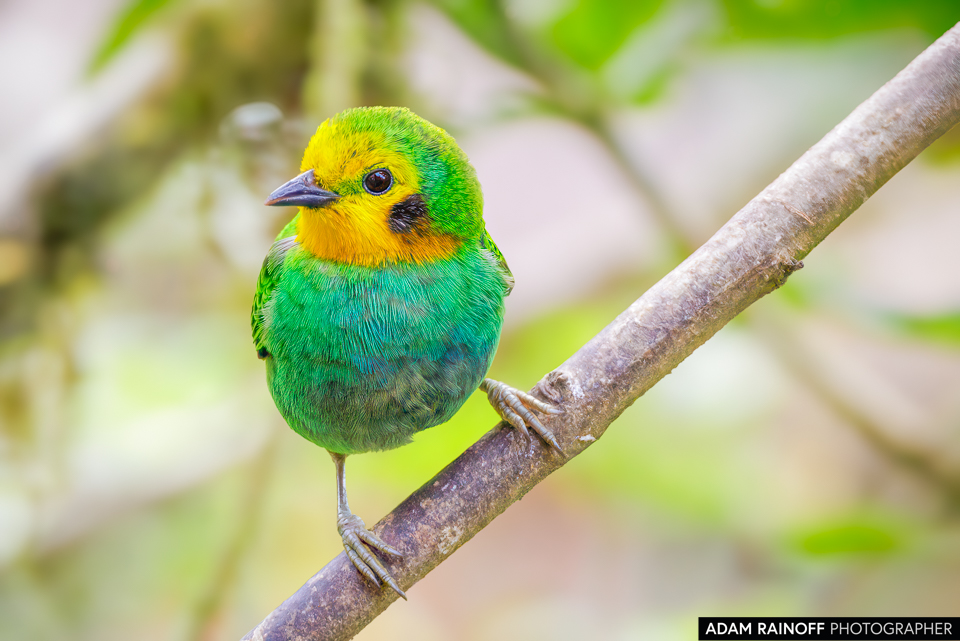
La Minga Ecolodge, Dapa, Valle del Cauca, Colombia · February 2021 · Near Threatened on the IUCN Red List
Read the story
The model
That is the work. Not a print shop. Not a campaign that asks you to feel something and then scroll on.
I go to places where the default economic choice is still to clear vegetation for agriculture. I make photographs and short contextual videos of the birds that depend on that vegetation. The videos go out on social media, where they reach millions of viewers worldwide. I license the work back to local lodges, guides and community projects so they can show the world what they have.
The location is always named. A species portrait floating in nowhere is not the point. A destination that can earn a living without taking the trees down is the point.
Why birds
I have worked this way in Colombia and Honduras, and in other wild places where birdlife is the clearest proof that a forest is still intact. Birds leave first when the canopy goes. People feel that loss faster than they feel a missing tree.
A bird in a standing forest is an argument. It says this place is already valuable. You do not have to invent a reason to keep it. You have to stop replacing it.
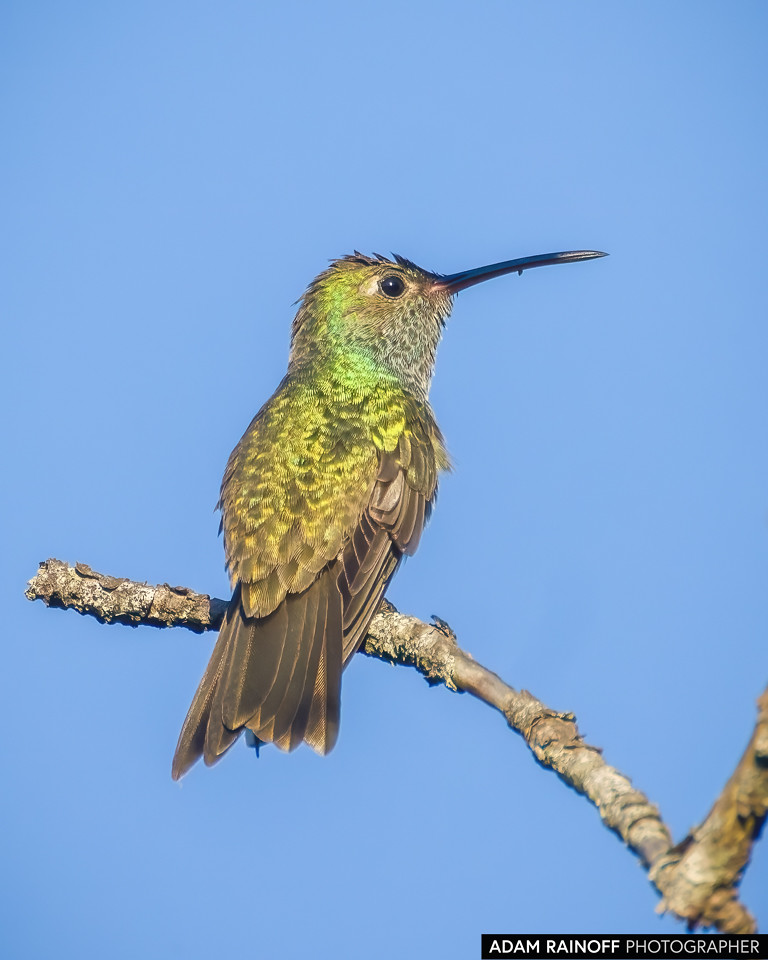
near Tierra Blanca, Gracias, Lempira, Honduras · January 2022 · Vulnerable on the IUCN Red List
Read the story
Where the stories are
Each story on rainoff.com is one photograph with its named place. Count of the 1,878 published stories by the country named on each story.
Source: rainoff.com stories (WordPress REST API, read 4 October 2026). Colombia and Honduras in white. Hong Kong stories name the country as China. 22 stories do not name a place yet.
Almost all Least Concern. Not all safe.
Each square is one bird species in the stories, 453 species, shaded by its IUCN Red List category.
- Endangered: 1
- Vulnerable: 7
- Near Threatened: 5
- Least Concern: 439
- No status on the story: 1
IUCN population trend for the same 453 species
Source: the IUCN Red List sentence on each rainoff.com story (category, trend and assessment year, linked to iucnredlist.org). The Southern House Wren has no IUCN line on its story yet.
Standing forest has to be seen to pay
Ecotourism is the alternative I am trying to make visible. Not as a slogan, and not as a promise that a photograph will save a valley.
Agriculture pays because it is simple: cut, plant, sell. Standing forest pays only if someone can see it, want it, and travel to it. Local people still have to build the capacity: trails, guides, rooms, safety, the story they tell when a visitor arrives.
I help with some of those projects, but I do not fund them and I do not run them. When I do take part, it is because we have partnered to make an event happen. What I do is supply the images they could not otherwise afford, tied to a real place, so the branding of the destination can start before clearing feels inevitable.
What clearing looks like in the two countries
Annual tree cover loss, thousand hectares, 2001 to 2024. White: loss where permanent agriculture was the dominant driver. Grey: all other drivers.
Colombia
5.57 million ha lost, 2001–2024 · 89.5% agriculture-driven
Honduras
1.47 million ha lost, 2001–2024 · 88.6% agriculture-driven
Source: Global Forest Watch (2025), Tree Cover Loss by Dominant Driver, processed by Our World in Data (ourworldindata.org/grapher/tree-cover-loss-by-dominant-driver and ourworldindata.org/grapher/tree-cover-loss, data downloaded 4 October 2026). Tree cover is all vegetation taller than 5 m and is not the same as natural forest. Methods changed between 2011 and 2015, so later years may read higher than earlier ones. The scales differ between the two charts.
What the photos do, and what they don’t
I will not tell you that any one site went from nothing to famous because of my photographs. I do not have that story, and I will not invent it.
The honest version is smaller and more useful. Locals ask for the photos. They use them. Some of those places stay viable enough to keep operating. Some are not ready yet, because they do not have the investment to build capacity.
My pictures are a spark, not the engine. The people on the ground do the heavy work. If a forest is still standing, it is standing because they chose to keep it, not because a photographer arrived.

Hostal Monte Verde, Copán, Honduras · January 2022
Read the story
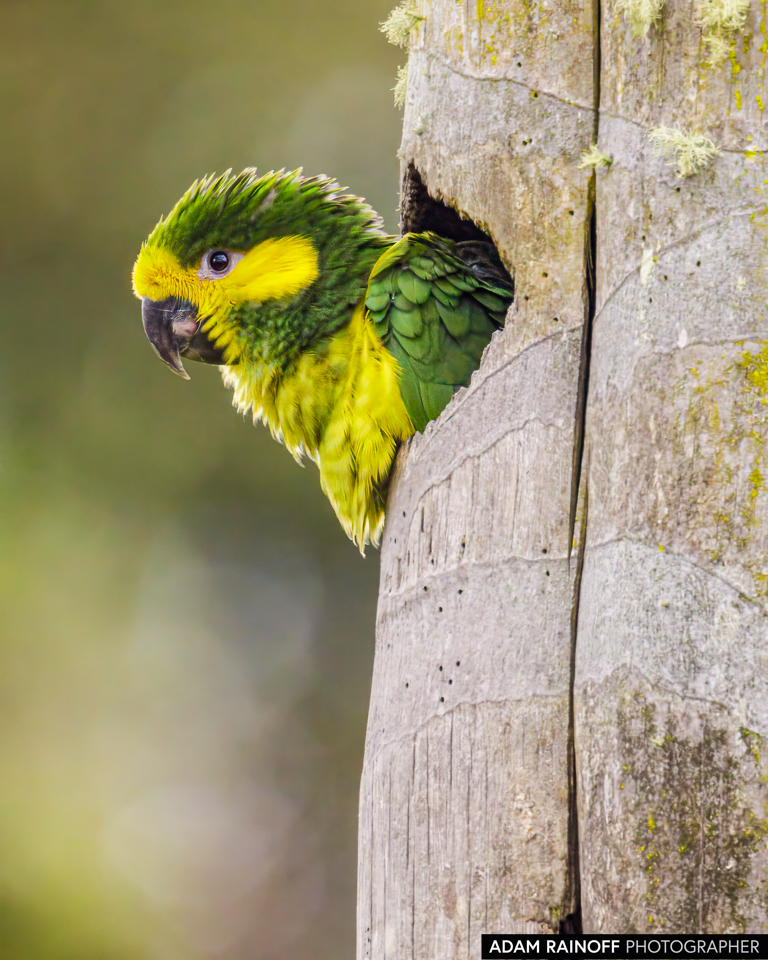
Mirador de Las Palmas lookout, Roncesvalles, Tolima, Colombia · July 2024 · Vulnerable on the IUCN Red List
Read the story
One job
That limit is the model, not a flaw in it. A lot of conservation photography tries to do everything: shoot, fundraise, speak for the community, sell prints, and claim the outcome.
I do one job. I make the work. I give it to the people who need it for their own place. I publish the location so more eyes land on that place. Eyes are the point. A person who sees a named forest and thinks they could go there, or protect the trees where they live, is the result I am after.
In the field

The named places
A record of some of the places in the stories, in Colombia and Honduras, dated by when each photograph was taken.
Río Blanco reserve, near Manizales, Caldas, Colombia
Brown-banded Antpitta, Vulnerable
Otún Quimbaya Fauna and Flora Sanctuary, near Pereira, Risaralda, Colombia
Cauca Guan, Vulnerable
Ukuku Rural Lodge, Juntas, Tolima, Colombia
Tolima Dove, Near Threatened
El Caraño, Florencia, Caquetá, Colombia
La Minga Ecolodge, Dapa, Valle del Cauca, Colombia
Multicolored Tanager, Near Threatened
Hostal Monte Verde and Hacienda Montecristo, Copán; near Tierra Blanca, Gracias, Lempira, Honduras
Turquoise-browed Motmot, Painted Bunting, Honduran Emerald (Vulnerable)
Veracruz and Hacienda Montecristo, Copán; Hummingbird Garden Celaque, Villa Verde, Lempira, Honduras
Gartered Violaceous Trogon, Lesson’s Motmot, Sparkling-tailed Hummingbird
Mocagua Indigenous community, Amazonas, Colombia
Mirador de Las Palmas lookout, Roncesvalles, Tolima, Colombia
Yellow-eared Parrot, Vulnerable
Caracolí Bird House, Villavicencio, Meta, Colombia
Stories by year photographed, Colombia (grey) and Honduras (white)
Source: the Flickr date taken stored on each rainoff.com story (from Flickr user arainoff).
Answering the critics
Other photographers have criticized this, mostly not to my face. The charge is that I work for free, that I take clients who would have paid, that I take freebies from the places I photograph.
I understand the fear. If you make your living licensing images, someone giving work away looks like a threat to the rate. I am not interested in spending my energy answering that. The people I work with were not, in most cases, about to hire a commercial shooter. A rural lodge trying to keep a forest does not have a stock budget. Giving them the files is not taking a client from someone else. It is creating a use that did not exist.
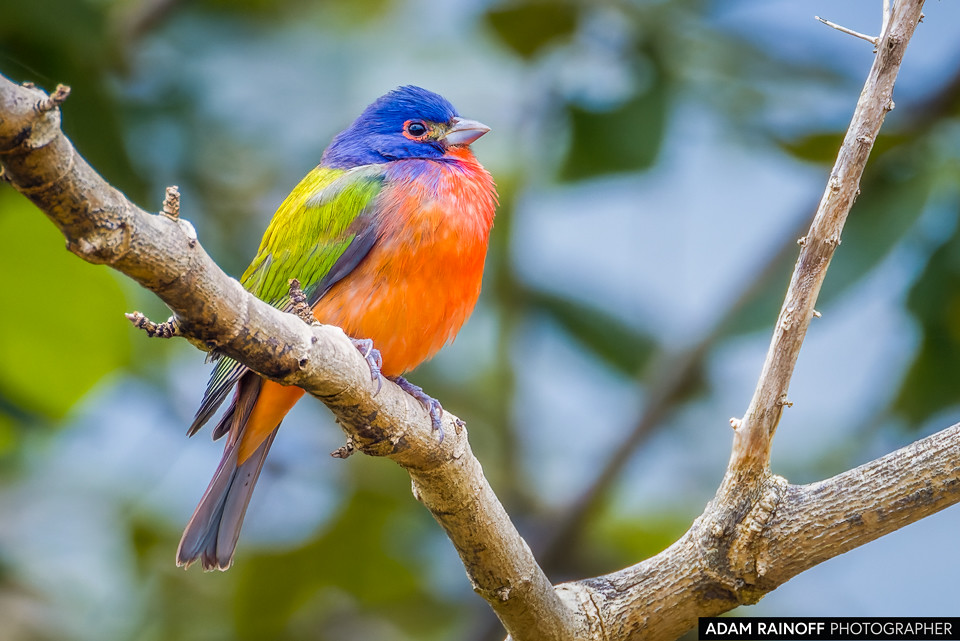
Hacienda Montecristo, Copán, Honduras · January 2022
Read the story
Whose benefit it is
I also do not accept the idea that the locals are being used. They ask. They use the images to present their own destination. They keep whatever visitors and attention follow. I am not the middleman for their money. I am the person they call when they need pictures of what they are trying not to lose.
The part I want to be known for is the model, not the highlight reel. The photographs matter because they are evidence of a living place. The practice matters more. A photographer can be useful without being a vendor, and without standing between a community and the benefit of its own landscape.
Teaching
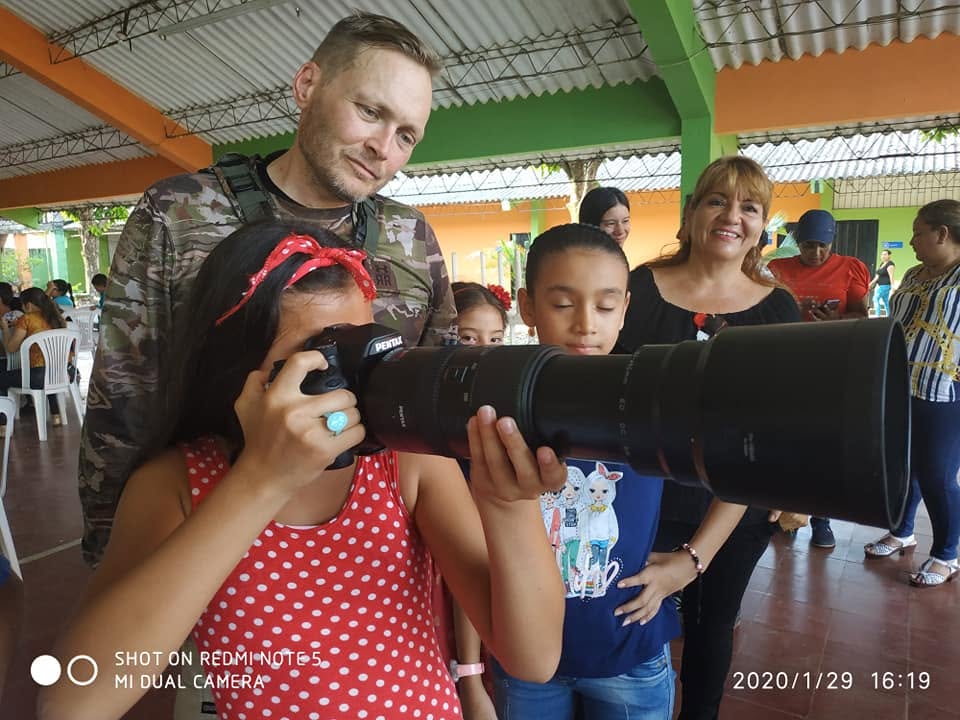
I teach photography in remote communities and at conferences and fairs, so other people can do this too. Not everyone who takes a class goes out and gives work away. Some do. That is enough.
A model only one person can run is a hobby. A model a few other photographers can run, in their own regions, with their own relationships, is how the idea travels.
Student work stays off my main feed. On a fast scroll, mixed credit gets read as mine, and that blurs the point. If you see a photograph on my main channels, it is mine. A student doing this work gets their name on it, on their own page. The classes are part of the mission. They are not a disguise for my portfolio.
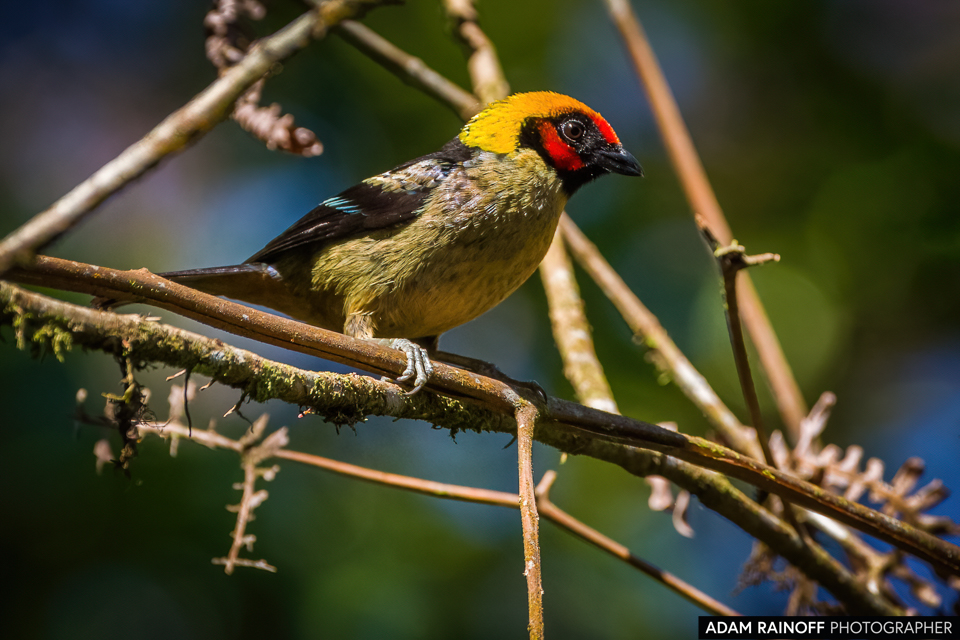
El Caraño, Florencia, Caquetá, Colombia · February 2020
Read the story
An invitation
If you live near a forest that someone wants to clear, look at what is already there before you accept that agriculture is the only way people survive. Birds, understory, a named place that could host a visitor: those are arguments for keeping vegetation. The same choice shows up in a backyard, a woodlot, a city edge and a remote valley. Saving a tree instead of taking it down is the whole idea.
If you run a lodge, a guide service or a community project in a wild place and you need images to show what you are protecting, you can ask. The license to you is at no cost. The location gets named. You do the rest.
If you photograph, and you have been told that giving work away makes you a fool, you can still decide what the work is for. I decided it is for the forest staying up, and for the people who stay with it.

Villa Verde, Lempira, Honduras · September 2022
Read the story
The quieter request
I will keep publishing the places. I will keep teaching the method. I will keep going back when I can.
The criticism from other photographers is loud. The request from a local who needs a picture of their own birds is quieter. I listen to the quieter one.