La historia
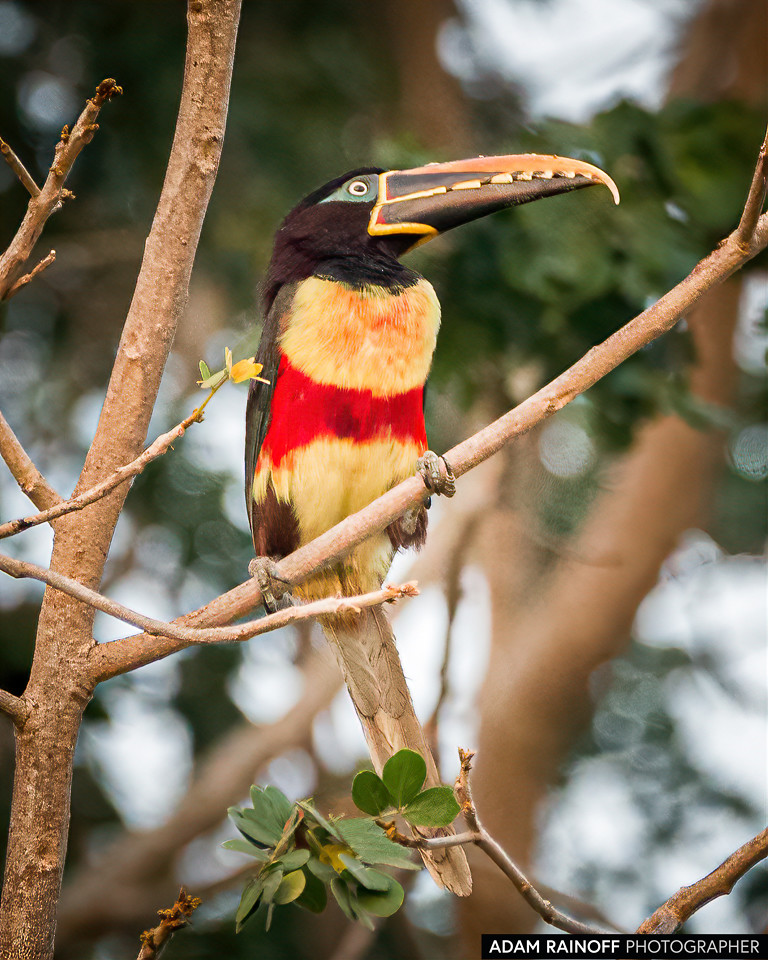
This Chestnut-eared Aracari (Pteroglossus castanotis) was at Reserva Natural Hato Berlín in Trinidad, Casanare, Colombia when I photographed it. The Chestnut-eared Aracari forages at all levels of the forest, plucking fruit from branches, even while hanging upside down. It mostly nests in old woodpecker holes, which it enlarges if needed. It is found from southern and eastern Colombia south through eastern Ecuador to southeastern Peru and east into Brazil. Hato Berlín is a civil-society nature reserve on the Casanare savanna, about 10 km from Trinidad, where capybaras, caimans, turtles, monkeys and savanna and marsh birds can be seen. IUCN lists the Chestnut-eared Aracari as Least Concern, with a decreasing population.
I made this frame with a Pentax K-1 and a 150-450mm f/4.5-5.6 lens, at 1/250 sec, f/5.6, ISO 3200. The Safari Llanero at Hato Berlín lets visitors watch and photograph wildlife in its habitat and share the culture and food of the people who live there.
©2019 Adam Rainoff Photographer
El ave
The Chestnut-eared Aracari (Pteroglossus castanotis) pertenece a la familia Ramphastidae (Toucans) en la taxonomía eBird/Clements.
Fuente: eBird.org (se abre en una pestaña nueva)
Conservación
Least Concern on the IUCN Red List (assessment published 2024), with the population trend listed as decreasing. Fuente: Lista Roja de la UICN