
The Story
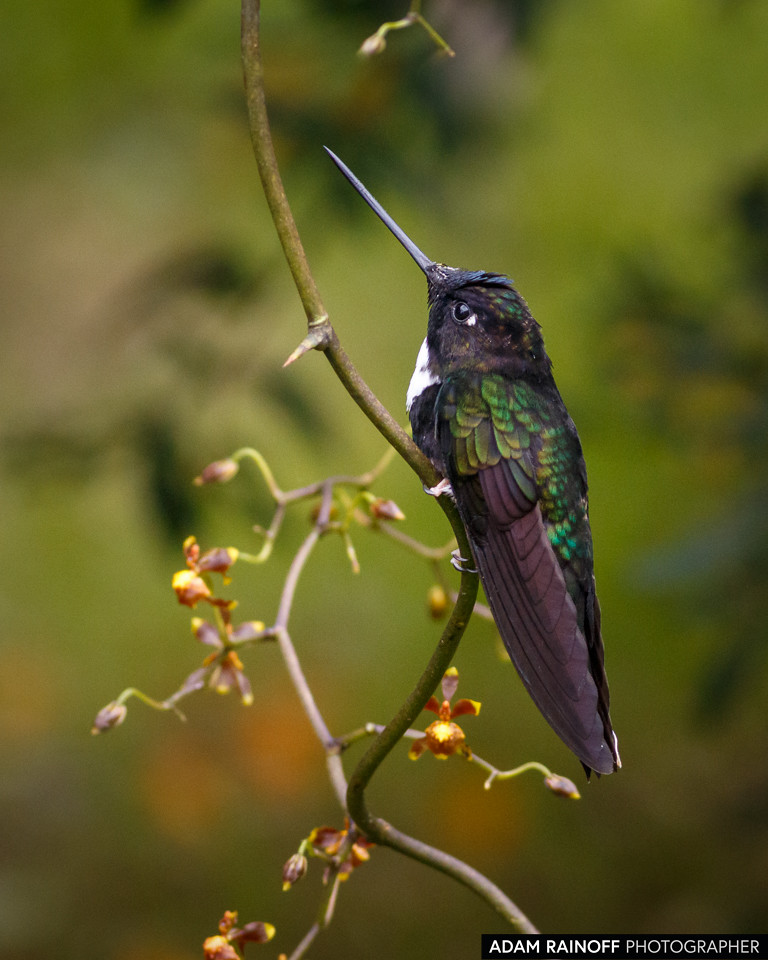
I photographed this Collared Inca (Coeligena torquata) at the Río Blanco reserve near Manizales, Caldas, Colombia on June 24, 2017. It takes nectar, especially from bromeliads, and pollinates the plants as it feeds. It eats small insects and other arthropods for protein and is usually solitary. It is a hummingbird of humid Andean forest from western Venezuela to Peru, with a white chest patch and white in the tail. More than 360 bird species have been recorded at Río Blanco, and it is known among birders for its antpittas.
I took this with a Canon EOS 70D and the EF400mm f/5.6L USM, at 1/1000 sec, f/5.6, ISO 1600. IUCN lists the Collared Inca as Least Concern with a decreasing population, and BirdLife International lists Río Blanco as an Important Bird Area, protected because its forest supplies about a third of the drinking water of Manizales.
©2018 Adam Rainoff Photographer
The bird
The Collared Inca (Coeligena torquata) belongs to the family Trochilidae (Hummingbirds) in the eBird/Clements taxonomy.
Source: eBird.org (opens in a new tab)
Conservation
Least Concern on the IUCN Red List (assessment published 2024), with the population trend listed as decreasing. Source: IUCN Red List