
The Story
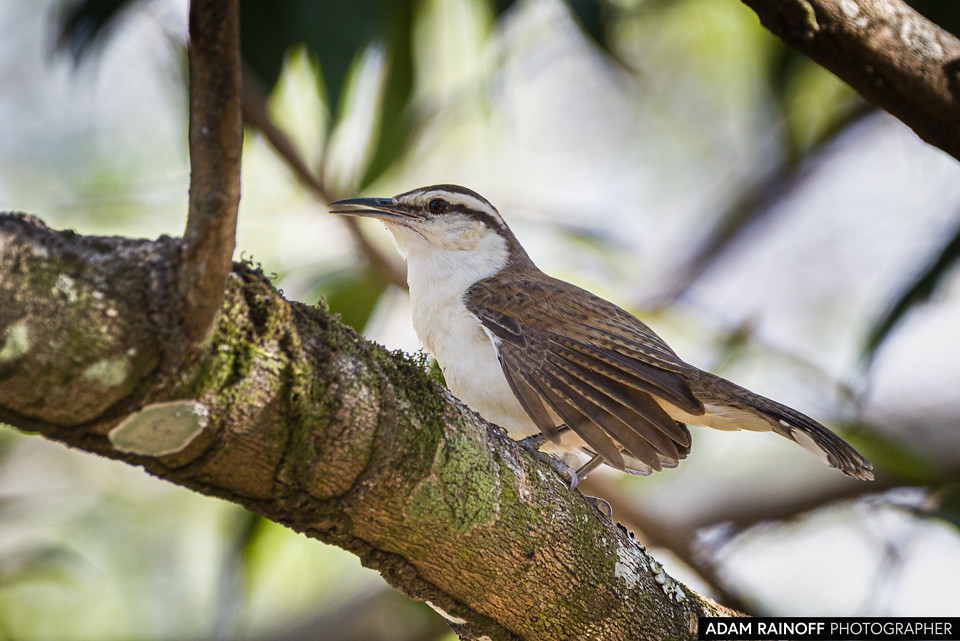
This Bicolored Wren (Campylorhynchus griseus) was at Reserva Natural La Palmita in Trinidad, Casanare, Colombia when I photographed it. In Colombia it lives up to about 2,100 meters, foraging both in trees and on the ground. It eats mainly invertebrates, along with berries. It is a cooperative breeder, with relatives helping the pair defend the nest and feed the young. Its nest is a dome of grass and fibers with a side entrance. La Palmita is a civil-society nature reserve in Trinidad that protects about 400 hectares of flooded savanna and 250 hectares of forest. IUCN lists the Bicolored Wren as Least Concern, with a stable population.
I made this frame with a Pentax K-1 and the HD Pentax-D FA 150-450mm f/4.5-5.6, at 1/250 sec, f/5.6, ISO 320. La Palmita’s research center also monitors the savanna’s birds and mammals and rehabilitates and releases wildlife rescued from illegal trafficking.
©2019 Adam Rainoff Photographer
The bird
The Bicolored Wren (Campylorhynchus griseus) belongs to the family Troglodytidae (Wrens) in the eBird/Clements taxonomy.
Source: eBird.org (opens in a new tab)
Conservation
Least Concern on the IUCN Red List (assessment published 2018), with the population trend listed as stable. Source: IUCN Red List