
The Story
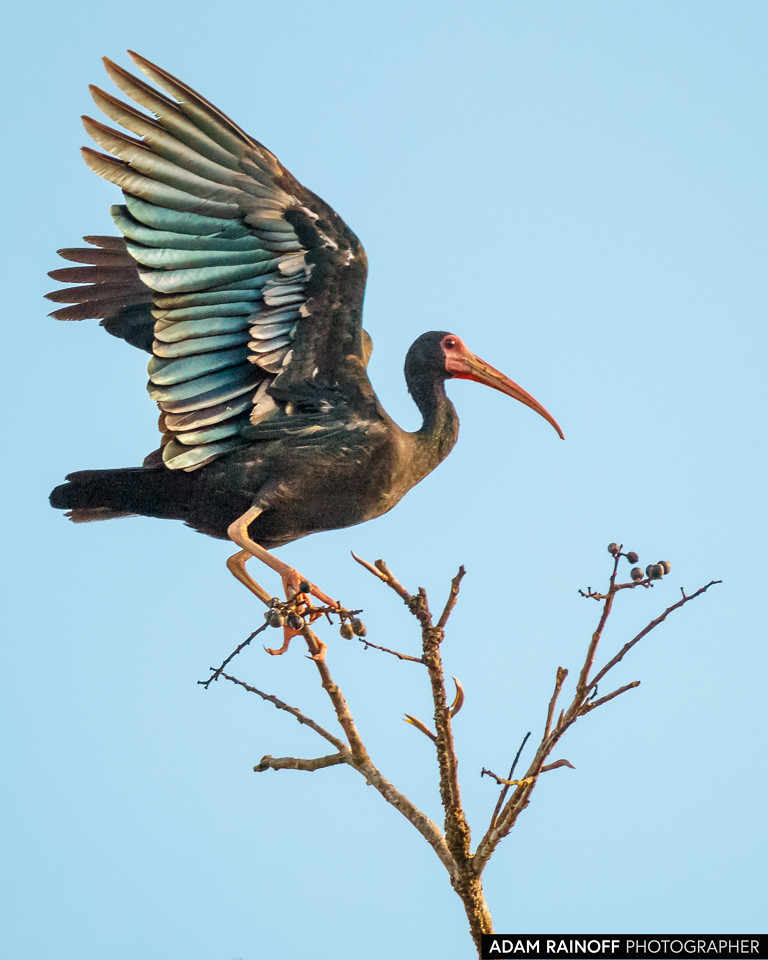
I photographed this Bare-faced Ibis (Phimosus infuscatus) in La Macarena, Meta, Colombia on July 6, 2017. It is called the bare-faced ibis because it has no feathers on its face, which is usually reddish. It has a long, down-curved bill and forages in soft soil and along the edges of standing water for insects, worms and other small invertebrates. It lives in open places such as wet meadows, savannas, marshes and rice fields. IUCN lists the species as Least Concern. La Macarena has become an ecotourism destination, above all for Caño Cristales, the river of five colors. The nearby Serranía de la Macarena is an isolated mountain range about 120 kilometers long, separated from the Eastern Andes.
I took this with a Canon EOS 70D and the EF400mm f/5.6L USM, at 1/1000 sec, f/6.3, ISO 250. The park here protects a meeting point of Amazon, Orinoco and Andean wildlife, and responsible visits help support it.
©2018 Adam Rainoff Photographer
The bird
The Bare-faced Ibis (Phimosus infuscatus) belongs to the family Threskiornithidae (Ibises and Spoonbills) in the eBird/Clements taxonomy.
Source: eBird.org (opens in a new tab)
Conservation
Least Concern on the IUCN Red List (assessment published 2025), with the population trend listed as stable. Source: IUCN Red List