
The Story
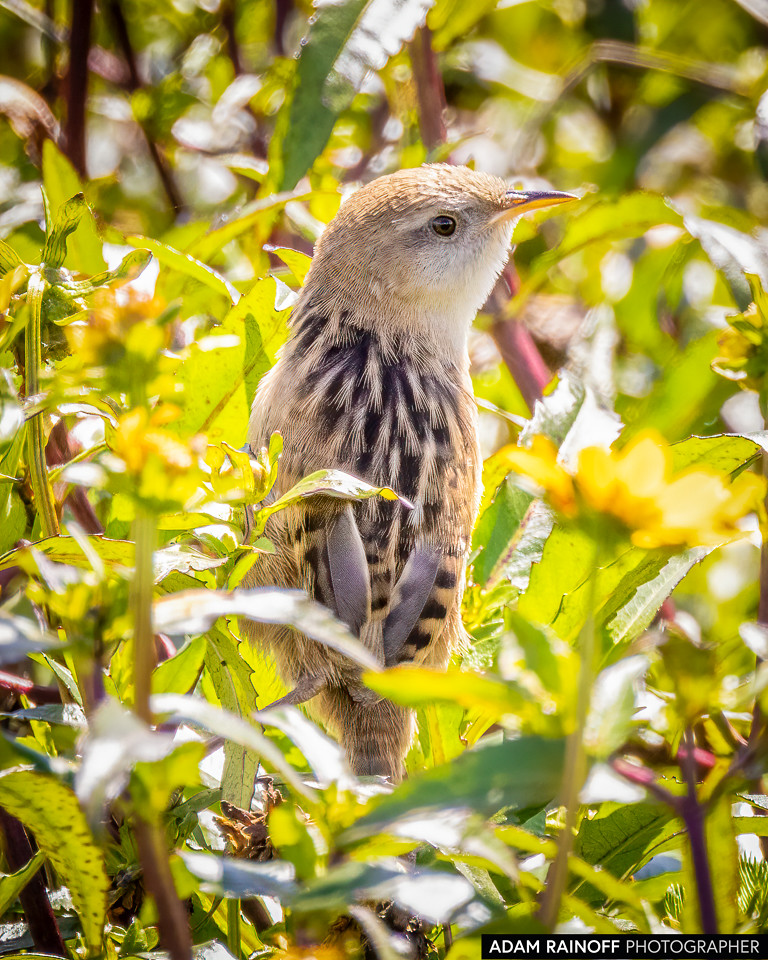
I photographed this Apolinar’s Wren (Cistothorus apolinari) at El Desaguadero on Lago de Tota, near Aquitania, Boyacá, Colombia, at about 3,020 meters. Its streaked back and chestnut crown help it blend into the marsh edge. It seems to breed from about February or March to October, and its nests are sometimes parasitized by Shiny Cowbirds. The male sings rising and falling churrs mixed with harsh, gravelly notes. A second subspecies, hernandezi, lives in boggy páramo on the Sumapaz Massif south of Bogotá. IUCN lists it as Endangered.
I photographed it with a Canon R5 and the RF 800mm f/11, at 1/350 sec, f/11, ISO 800, +1 EV. Lago de Tota, in the Sugamuxi Province of eastern Boyacá, is Colombia’s largest lake and the source of the Upía River.
©2021 Adam Rainoff Photographer
The bird
The Apolinar’s Wren (Cistothorus apolinari) belongs to the family Troglodytidae (Wrens) in the eBird/Clements taxonomy.
Source: eBird.org (opens in a new tab)
Conservation
Endangered on the IUCN Red List (assessment published 2021), with the population trend listed as decreasing. Source: IUCN Red List